
Opening your electric bill in Hawaii is already a bit of a nail-biter, but it is about to get a lot less predictable. Hawaiian Electric has warned that typical residential bills could climb between 20 and 30 percent over the next several months, with Oahu households feeling it first and Maui County close behind. When you live on the islands, you expect a paradise premium on milk and gas, but a sudden spike in your monthly power bill hits differently. Before that next statement lands in your inbox, here is what is actually driving the increase, and what Oahu and Maui homeowners can do right now to soften the impact.
What’s Happening and Why It Matters
Global oil prices are rising, and Hawaii’s electric grid still leans heavily on imported fuel to keep the lights on. When fuel costs spike on the world market, that premium flows directly into local electric rates because the islands lack the access to domestic power pipelines enjoyed by mainland states.
According to reports from Spectrum News, Hawaiian Electric is rolling out the increases in stages. Oahu customers will see the surge show up on April bills. Hawaii Island and Maui County customers follow next, with higher bills landing in May and June. While the utility is offering interest-free payment plans to help households spread out the initial shock, these plans simply delay the expense rather than reducing it.
This is not a temporary blip. Hawaii’s exposure to global fuel markets means rate volatility will resurface whenever oil prices swing. This structural reality is exactly why more homeowners are looking for ways to reduce their reliance on the grid entirely.
What Homeowners Can Do Right Now
You’re probably asking, “How can I soften the blow of the Hawaii electric bill increase? Before making any major investments like solar, a few quick habit changes can take some immediate pressure off your next utility statement.
Anything that generates heat is a primary energy drain. Cutting back on water heater demand, heavy oven use, or running the clothes dryer during peak hours adds up faster than most people expect. Shifting your air conditioning baseline to 78 degrees, or utilizing ceiling fans for an hour here and there, makes a measurable dent. You can also eliminate phantom power draw by unplugging secondary devices like printers, gaming consoles, and charging blocks when they are not actively in use.
Quick Habits to Lower Your Bill + When Solar Becomes the Real Fix
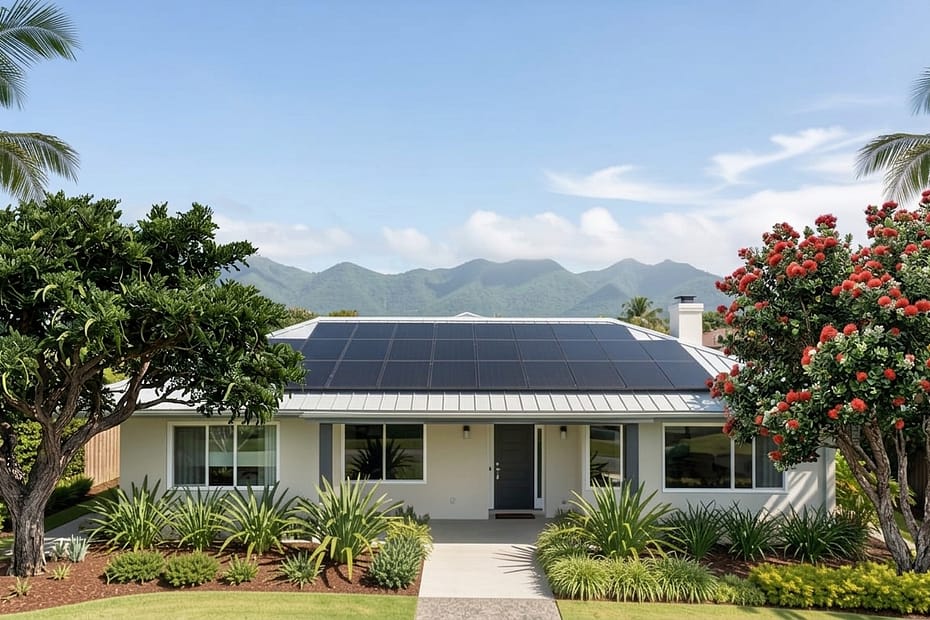
While these habits help, they can only do so much against a 20 to 30 percent rate hike. For a permanent fix, rooftop solar paired with battery storage is the definitive move for island homeowners.
Solar allows you to generate your own power instead of buying it from the utility at peak rates. Adding a battery system secures that power for nighttime use, insulating your household from future regulatory or market swings. Even after making the switch, you can maximize your investment by running high-draw appliances during peak sunlight hours and tracking your production curves; if you are looking for a complete roadmap, Independent Energy Hawaii offers a practical guide on 5 ways to lower your electric bill after going solar to ensure your monthly utility costs stay as low as possible.
The transition does not have to happen all at once. Some homeowners assume they need to install panels and batteries simultaneously, but that is not a requirement. Plenty of properties start with solar panels alone, analyzing their production curves before adding storage later. A quality installer will map out the specific tradeoffs of both paths rather than pushing a rigid, one-size-fits-all package.
Common Mistakes to Avoid
- Waiting for the bill to arrive: Taking action only after the higher statement hits your kitchen counter means you are reacting instead of preparing. By then, the money is already gone.
- Skipping localized rebates: Programs through Hawaii Energy offer direct incentives that knock real money off energy efficiency upgrades, including heat pump water heaters.
- Assuming solar no longer pencils out: Pausing because utility landscapes are changing is backwards thinking. Rate volatility is actually the single strongest argument for solar, providing the predictable baseline that the grid cannot guarantee.
Why This Hits Hawaii Differently
Mainland states have structural safety nets. They can balance out localized price spikes by pulling from natural gas pipelines, coal facilities, or broader regional power grids. Hawaii operates on an isolated system. This independence means imported oil plays an outsized role in daily power generation, transforming global market spikes into immediate local liabilities.
Maui County households face the exact same percentage increases as Oahu, just on a slightly delayed timeline. The utility itself has acknowledged this exposure publicly, pointing to expanded solar, wind, and utility-scale storage projects as the only viable long-term solution for the state. When the power company is moving in that direction, it is a clear indicator that homeowners should look at doing the same on their own roofs.
Frequently Asked Questions
When will my Hawaiian Electric bill actually go up?
Oahu customers will see the increase reflected in April bills. Hawaii Island and Maui County customers will see their rate adjustments follow in May and June.
Are payment plans available to help manage the increase?
Yes. Hawaiian Electric is opening interest-free payment plans to help households spread the cost of the rate increase over several months rather than absorbing it in a single billing cycle.
Does solar still make financial sense with unpredictable rates?
It makes more sense now than ever. Volatility tied to global fuel prices is the exact risk that solar and battery storage systems mitigate, giving you control over your monthly operational costs.
How much can I realistically save by switching to solar?
Savings depend on your current baseline usage, roof orientation, and available incentives. However, because Hawaii has some of the highest electricity rates in the nation, solar systems here typically achieve a return on investment much faster than mainland installations.
When to Call a Pro
Determining whether solar and battery storage fit your property requires analyzing your specific roof alignment, shading patterns, and historical energy consumption. A generic online estimator cannot calculate these factors accurately. A proper site assessment looks at your actual HECO statement and household habits to engineer a system scaled to your exact needs.
Independent Energy Hawaii provides transparent, no-pressure consultations for homeowners across Oahu and Maui who want a clear look at how solar impacts their bottom line. With more than 2,000 systems installed across the islands, our team designs systems engineered for Hawaii’s distinct climate and architectural styles.