

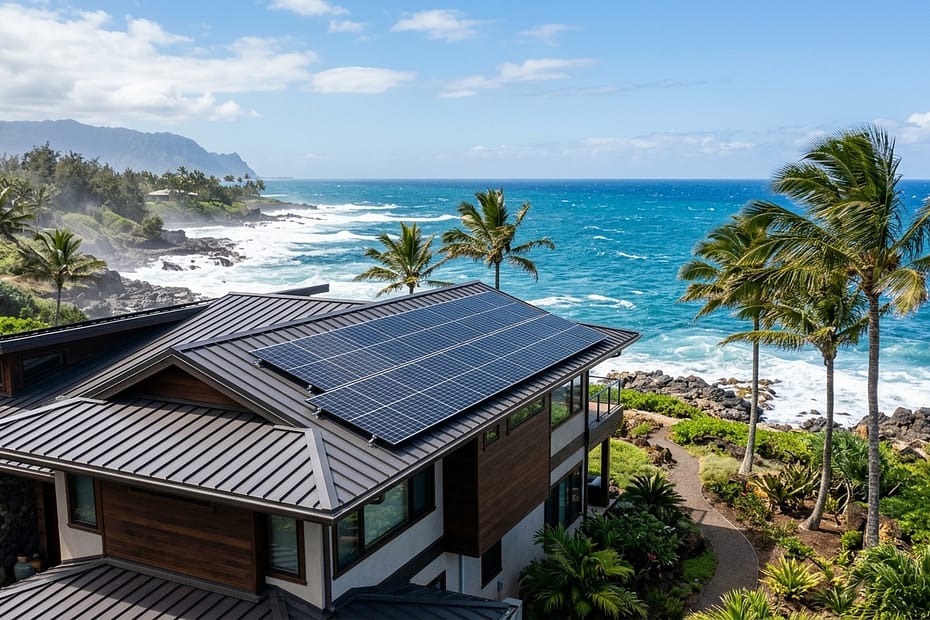
Living near the ocean in Hawaii is one of life’s better problems to have. But if you have solar panels on your roof, or you’re thinking about installing them, the salt air in Hawaii isn’t just a backdrop. It’s actively working on your system, every single day.
The good news is that a well-specified coastal installation handles Hawaii’s marine environment without issue. The less-good news is that a lot of homeowners, and even some installers, focus on the wrong parts of the system when it comes to corrosion protection. Understanding where the real vulnerabilities are makes a meaningful difference in how long your system lasts and how much it produces over its lifetime.
Salt Air Damage Starts at the Chemistry Level
When ocean air moves across your roof, it carries microscopic chloride ions from the saltwater. Those ions don’t just sit on the surface; they dissolve into the thin layer of atmospheric moisture that coats everything your system is made of. That moisture film becomes an electrolyte, which is essentially a conductive liquid that accelerates electrochemical reactions between metals.
The result is two specific types of damage. The first is pitting corrosion, where tiny but deep holes form in metal surfaces and gradually compromise their structural integrity. The second is increased electrical resistance across connections and components. Higher resistance means your system works harder to push the same current through, and that translates directly into reduced daily power output. Research from Talukder et al. published in 2025 confirmed both effects, finding measurable drops in current consistency in systems exposed to corrosive environments.
On the panel glass itself, salt builds up as a crust between cleanings. That layer blocks incoming sunlight and can reduce your system’s output by around six percent before you’d even notice anything was wrong visually.
The Part of Your System That Actually Fails First
Most of the conversation about salt air and solar focuses on the panels themselves, specifically the glass and the photovoltaic cells underneath. But in actual coastal installations, the panels are rarely the first thing to go. The mounting hardware is.
Your panels sit on aluminum racking that is bolted to your roof using stainless steel fasteners. In a humid, salt-heavy environment, putting stainless steel bolts in direct contact with aluminum triggers what’s called galvanic corrosion. It’s an electrochemical process where two dissimilar metals in contact, in the presence of an electrolyte like salty moisture, cause one metal to corrode the other. Over time, this eats through the hardware holding your array together, which creates structural problems and makes future maintenance or roof work considerably more difficult.
The fix isn’t complicated, but it has to be specified from the start. Anodized aluminum racking, marine-grade stainless steel fasteners, and isolation washers or pads that keep dissimilar metals from touching each other are the combination that holds up in Hawaii’s conditions. If your installer isn’t talking about this during the design phase, it’s worth asking about.
Your Inverter Is More Exposed Than You Think
The inverter is the component that converts the DC power your panels produce into the AC power your home actually uses. Its exposure to salt air depends entirely on what type of system you have.
String inverters are typically mounted on the side of your home or inside a garage, which gives them a degree of natural shelter from the elements. Microinverters, which are the type used in Enphase systems, are mounted directly underneath each panel on the roof. That means they’re out in the open, exposed to warm, salty trade winds every hour of every day.
Neither design is a problem when the equipment is properly rated for marine environments. The standard to look for is a NEMA 4X enclosure rating. NEMA 4X means the housing is sealed against moisture, corrosion, and the kind of salt-laden air Hawaii’s coastal homes deal with constantly. It’s the marine-grade standard, and it matters for any electronics mounted outdoors in this climate.
Hawaii’s Trade Winds Don’t Just Carry Salt, They Drive It In
Salt air is more aggressive in Hawaii than in many coastal markets for one specific reason: it doesn’t sit still. The trade winds that make the islands so livable are also constantly pushing salt-laden air across rooftop arrays at speed.
That wind has another effect beyond just delivering salt. Debris carried by strong winds creates micro-cracks in solar glass over time. Those cracks are often too small to see, but they give chloride ions a direct path into the copper electrical connections inside the panel, which are far more vulnerable than the glass itself.
Engineering data from post-typhoon assessments in the Pacific found that keeping panels at a low tilt angle, five degrees or less, and closer to the roof line significantly improves storm resilience and reduces the turbulent airflow that pushes salt spray underneath the array. It’s a design consideration worth discussing with your installer, particularly for homes with more direct ocean exposure.
What to Look for in a Coastal Solar Installation
When you’re evaluating a solar system for a Hawaii home, the questions worth asking go beyond panel brand and warranty length. A few specific things to look for:
IEC 61701 certification on the panels themselves. This is the international salt mist resistance test. Panels that carry this certification have been tested against the specific conditions Hawaii’s coastal homes deal with.
Anodized aluminum racking with isolation hardware. Black anodized aluminum is the standard for coastal installs. The isolation pads matter as much as the racking material.
Marine-grade stainless fasteners with anti-seize coating. This protects the bolts from locking in place over time, which makes any future roof or system work considerably easier.
NEMA 4X rated inverter housing. Whether you’re running microinverters or a string inverter, the enclosure rating tells you how well the electronics are protected.
A regular freshwater rinse schedule. Salt crust builds up between rain events, especially during drier periods. A simple freshwater rinse a few times a year, without harsh chemicals, removes buildup before it affects production. Independent Energy Hawaii’s SolarServe maintenance program covers cleaning and system health checks if you’d rather leave it to a professional.
Frequently Asked Questions
Do solar panels in Hawaii degrade faster because of salt air? They can, but a properly specified system designed for coastal conditions holds up well over its rated lifespan. The key is using the right materials from the start: certified panels, anodized racking, marine-grade hardware, and properly rated inverter enclosures.
How do I know if my existing system is at risk from salt corrosion? Signs to look for include discoloration or rust around mounting hardware, visible degradation on racking rails, or a gradual unexplained drop in system output. Our solar repair and inspection team can identify issues before they become costly.
How often should I clean my panels if I live near the ocean in Hawaii? A few times a year is a reasonable baseline, more frequently during periods without significant rainfall. Always use fresh water and avoid abrasive materials. Independent Energy Hawaii’s SolarServe maintenance program covers cleaning and system health checks if you’d rather leave it to a professional.
What does IEC 61701 certification mean for solar panels? It means the panels have passed a standardized salt mist test, confirming the materials and sealing can handle sustained exposure to salty, humid air. For Hawaii homeowners, it’s one of the more meaningful specifications to check.
Does Independent Energy Hawaii design systems specifically for coastal conditions? Yes. Hawaii’s marine environment is part of every system design conversation we have. We specify materials and equipment rated for this climate and offer ongoing maintenance to keep your system performing the way it should.
The Bottom Line
Hawaii’s salt air is a real factor in how a solar system is designed and specified. The homeowners who end up with the most durable, highest-performing systems aren’t necessarily the ones who bought the most expensive panels; they’re the ones whose installer thought carefully about the hardware, the enclosures, and the details that don’t show up in the brochure.
Independent Energy Hawaii has been installing systems on Oahu since 2009. We know this climate, and we design accordingly. Get your free estimate and we’ll walk you through exactly what a coastal installation done right looks like for your home.